




The U visa is a special immigration benefit for victims of crime who assist law enforcement. It grants temporary U non-immigrant status for up to four years, along with work authorization, to help vulnerable victims stabilize their lives. Critically, it also provides a path from U visa to Green Card, meaning U visa holders can become lawful permanent residents. This guide explains how to get a green card after a U visa, including the eligibility requirements, application steps, timeline, and tips for U visa holders.
U visa recipients often endure a long wait due to limited visa availability. Congress caps U visas at 10,000 per year for principal applicants (victims), while tens of thousands apply annually. As a result, there is a massive backlog; over 268,699 U visa petitions were pending by early 2021, and by 2023, more than 207,000 principal U visa applications were still in line. This backlog means many crime victims wait years just to receive a U status. However, once you do obtain U status, you can work toward a green card. The sections below detail the U Visa adjustment of status process, also called the U non-immigrant status to permanent resident process. We’ll cover the requirements for a green card after a U visa, the step-by-step process, expected timelines, and special considerations for family members.
Eligibility for U Visa Adjustment of Status (2024 Requirements)
Not every U visa holder can immediately apply for a green card you must first meet certain conditions set by law. As of 2024, eligibility for a U visa adjustment of status requires fulfilling all of the following:
Continuous Physical Presence
You have been continuously physically present in the United States for at least 3 years since obtaining a U visa status. This “continuous presence” is strict. Travel outside the U.S. is strongly discouraged for U visa holders until getting a green card. A single trip over 90 days, or multiple trips totaling more than 180 days, can break your continuous presence and jeopardize your green card eligibility.
Continued Cooperation with Law Enforcement
You have not unreasonably refused to assist law enforcement or prosecutors in the criminal case since receiving the U visa. In practice, this means you remained willing to help authorities if asked, up through the time of your green card application.
Admissibility or Waiver
You are not barred from adjusting status on any other grounds, or you have obtained a waiver of inadmissibility for any issues. Many U visa holders have already received a waiver via Form I-192 when the U visa was granted. You must continue to be admissible, for example, avoid serious criminal activity or immigration violations after getting the U visa.
Valid U Status
You were admitted under a U non-immigrant status and still hold that status or an extension at the time you file for the green card. In other words, your U visa must be active. U status is valid for 4 years, and extensions are very limited. If your 4-year period is ending, you should either file for an adjustment or obtain an extension in the rare scenarios allowed, such as a law enforcement request or having a pending green card application.
Humanitarian/Public Interest Grounds
U visa adjustments also require that the immigration agency determine your continued presence is justified on humanitarian grounds, to ensure family unity, or is in the public interest. This is usually implicit, given the nature of the U visa program. Just be prepared to show that granting you a green card “benefits the public or family unity,” which is generally supported by your history of cooperation and the hardship you’d face if not allowed to remain permanently.
If all the above requirements for a green card after a U visa are met, you and any derivative family members with U visas can proceed to apply for permanent residence. The next section outlines the process step by step.
Steps to Obtain a Green Card After U Visa Status
Applying for permanent residency with a U visa is done through an “adjustment of status” application to U.S. Citizenship and Immigration Services (USCIS). Below are the U visa to green card process steps in order:
1. Complete Three Years in U Status:
Ensure you have accrued at least 3 years in the U.S. on U-1 (or U-2/U-3, etc.) status. Mark the date you first received U status; you become eligible to file your green card application after 3 years of continuous U presence. Example: If your U-visa was approved on June 1, 2021, you can file for adjustment on June 2, 2024. When to file Form I-485 for U visa holders? As soon as you hit the 3-year mark. Do not delay, apply as soon as you become eligible, since U visas expire after 4 years and are only extendable in very rare cases. Filing promptly ensures your status won’t lapse. If a derivative family member received their U visa later than the principal, their 3-year clock starts from the date they were granted U status or entered the U.S.
2. Gather Required Documents (U Visa Green Card Checklist):
Preparing a thorough application package is crucial. Here is a checklist of documents needed for U visa to a green card adjustment:
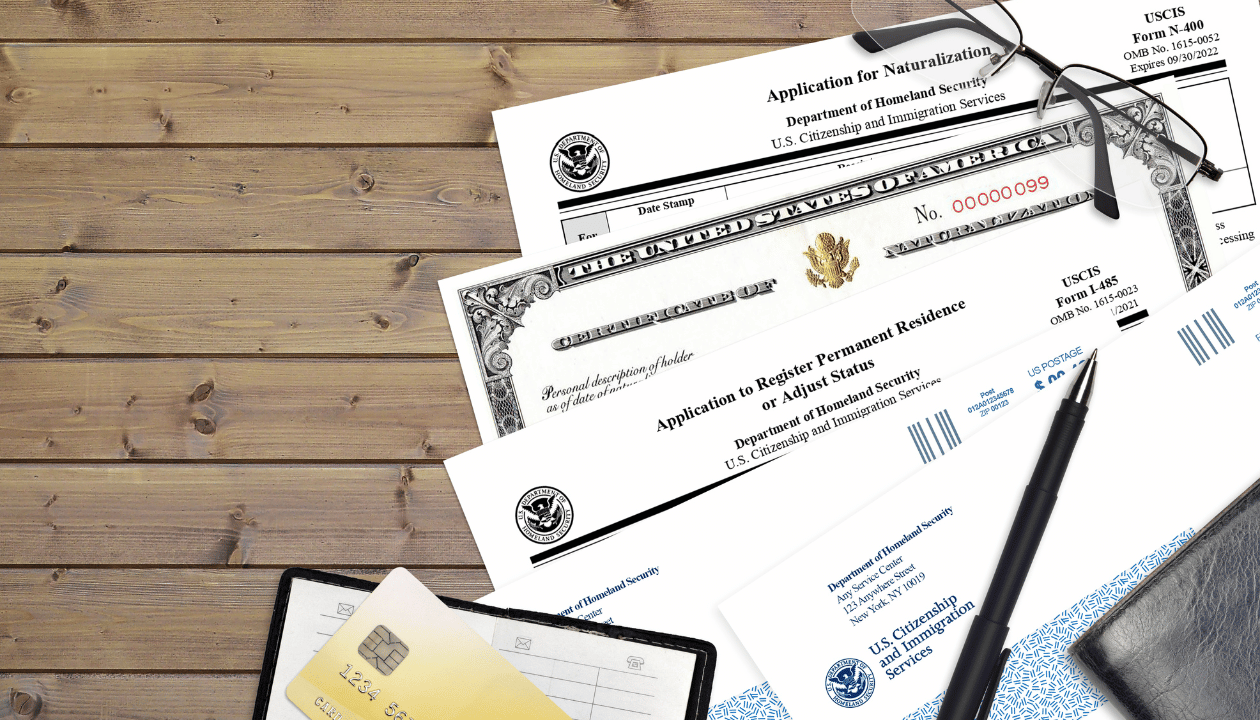
Form I-485, Application to Register Permanent Residence:
This is the main form to apply for a green card. U visa holders should mark the category as a U-based adjustment under INA 245(m).
Form I-485 Supplement E:
U visa and T visa applicants must include Supplement E with Form I-485. This supplement asks for details proving you meet the U visa adjustment requirements (3-year presence, cooperation, etc.).
Proof of U Status:
Include a copy of your U visa approval notice (Form I-797) or U visa card, and your Form I-94 Arrival/Departure record showing U status. For derivatives, proof of derivative status approval is needed.
Evidence of Continuous Presence:
This is critical. Gather documents spanning the entire 3+ year period to show you have been living in the U.S. continuously. Examples include leases, utility bills, school records, medical records, pay stubs, tax filings, bank statements, etc., covering each portion of the 3-year timeline.
Police Clearance Certificates:
USCIS may require evidence that you have a clean record since obtaining the U visa. It’s wise to obtain police clearance letters from local police in areas you have lived, showing you have no serious criminal history in that period.
Personal Statement (Optional):
Although not strictly required, many applicants include a cover letter or statement explaining how they have complied with all conditions, e.g. continued cooperation with law enforcement and why getting a green card is warranted on humanitarian or public interest grounds. If you have any updates on the criminal case or any continued assistance you provided, mention that. A letter from a law enforcement official confirming you did not refuse help (if available) can be powerful evidence.
Medical Examination (Form I-693):
A USCIS-approved civil surgeon must complete a medical exam and vaccination record for you, and give you a sealed Form I-693. Include this form to show you have no health-related inadmissibility.
Filing Fee or Fee Waiver:
As of 2024, the Form I-485 filing fee for most applicants is $1,140 plus $85 biometrics fee. However, U visa applicants are generally exempt from these fees. USCIS does not charge an I-485 fee for U-based adjustments fees are waived by regulation. Double-check the latest policy; if a fee applies or you cannot afford it, include Form I-912 to request a fee waiver.
Photographs:
Two recent passport-style photos of yourself and any applying family members are typically required. Write the name and A-number lightly on the back in pencil.
3. Submit the Application to USCIS:
Once your forms are filled out and documents assembled, mail the packet to the correct USCIS filing address for Form I-485 based on U visas. As of now, U visa-based I-485s are filed at the Nebraska Service Center, but check USCIS’s website for any updates on filing locations. Be sure to include all supporting evidence and properly signed forms. After submission, USCIS will issue a receipt notice confirming they received your application.
4. Biometrics Appointment:
A few weeks after filing, USCIS will schedule you for a biometrics appointment at a local Application Support Center. They will take your fingerprints, photo, and signature for background checks. This is routine for all adjustment applicants.
5. Respond to Any Requests:
USCIS might send a Request for Evidence (RFE) if something is missing or if they need additional proof, for example, more evidence of continuous residence or any updated documents. If you receive an RFE, respond by the deadline with the requested info to avoid denial or delay.
6. Interview (if required):
USCIS may call you for an adjustment of status interview at a local field office. Not all U visa adjustment cases are interviewed, but be prepared. At an interview, a USCIS officer will review your application and ask questions about your background, U visa experience, and current life. They may verify that you meet the criteria, e.g. you really stayed in the U.S. for 3 years and remained helpful to law enforcement. Answer honestly and provide any additional documents they request.
7. Approval – Becoming a Permanent Resident:
If all goes well, USCIS will approve your I-485 application. You’ll receive an approval notice, and soon after, your physical green card in the mail. The green card obtained through U visa adjustment is an unconditional permanent resident card, not a 2-year conditional card, since this is not marriage-based. The date of admission on your green card will be backdated to 3 years before the approval date, a unique feature for U visas. This backdating can make you eligible for U.S. citizenship a bit sooner down the line, since five years of residency are required for naturalization.
8. Denial or Issues:
If USCIS denies the application, they will send a notice explaining why. Denials can be due to not meeting the requirements or other inadmissibility problems. In some cases, you might be able to appeal or file a motion to reopen, but it’s important to consult an immigration attorney if a U-based I-485 is denied. However, most U visa holders who meet the statutory criteria are approved. The program is designed to allow crime victims to become permanent residents after fulfilling the requirements.
Throughout this process, continue to maintain your U status until the green card is approved. If your U visa 4-year term is nearing expiration while your I-485 is pending, USCIS will typically grant an extension of U status automatically upon filing for AOS. It’s a good idea to include a copy of the I-485 receipt notice with a request to extend U status, if needed. This ensures you remain in legal status while waiting for the green card.
Timeline for U Visa to Green Card
How long does it take to get a green card after a U visa? The timeline can be broken into two parts: time spent obtaining the U visa and time spent obtaining the green card. Unfortunately, the initial U visa wait is the longest part. Due to the 10,000/year cap, some U visa petitioners wait over a decade just to receive the U visa itself. USCIS has tried to speed up initial processing by introducing a bona fide determination (BFD) work permit process, but many applicants still spend 5+ years in the queue before getting U status.
Once you have U non-immigrant status, you must then complete 3 years in that status before applying for adjustment. During this period, maintain your residence in the U.S. and keep out of legal trouble. After filing the I-485, the processing time for U visa holders’ green card applications is generally much shorter than the initial wait for the visa. USCIS does not publish a specific average for U-based adjustments, but many applicants have reported adjustment processing times of roughly 1 to 2 years in recent years. This means that from the point of filing the I-485 to approval, you might wait a year or two, depending on the case load and whether an interview or RFE is needed.
Continuous Presence Tip
During the 3-year wait before applying for the green card, make sure not to disrupt your continuous physical presence. As mentioned, avoid international travel unless absolutely necessary. Even brief trips can be risky. If you must travel abroad while in U status, consult an immigration attorney about obtaining advance parole or other advice. Generally, U visa holders should not travel outside the U.S. until they receive permanent residency. Exiting the country could force you to undergo consular processing to re-enter, which is cumbersome and can cause delays.
USCIS Processing Times
USCIS has improved some processes in recent years, but U visa adjustments can still take time. Always check the USCIS “Check Processing Times” tool for Form I-485 under the humanitarian category to see current estimates. As of 2025, many U-based adjustment cases were being completed in under 24 months, but this is subject to change. If your case is outside normal processing times, you or your attorney can submit a case inquiry with USCIS. Remember, while waiting, you should renew your work permit (EAD). U visa holders get an initial EAD with U status, and you can also request an EAD based on the pending I-485 after your U status EAD expires, so you can continue working legally during the transition.
Family Members: Derivatives and the I-929 Petition
U visas often include immediate family members of the victim, known as derivative U visa holders. A U-1 visa is for the principal applicant (crime victim), while U-2 visas are for spouses, U-3 for children, U-4 for parents if the principal is under 21, and U-5 for minor siblings if the principal is under 21. These family derivatives can also become permanent residents, but the process depends on whether they had U visas or not:
Derivatives Who Have U Visa Status
If your spouse, child, or other family member was granted a U derivative visa, they essentially follow the same adjustment process as the principal U-1. U-2 derivative green card process: Each derivative must independently meet the requirements, primarily 3 years in U status and continued cooperation. Once eligible, they file their own Form I-485 with Supplement E to adjust status. They can file at the same time as the principal or after, as long as they have accrued 3 years in U status.
Family Members Without U Visas (Qualifying Relatives)
It’s possible that some of the principal U-1’s family did not receive U derivative visas. For instance, maybe the principal got a U visa alone, or a child was born after the U visa was granted, or a family member was not in the U.S. and wasn’t included initially. Once the principal U-1 becomes a permanent resident, those relatives can no longer obtain a U visa but they may still be eligible for a green card through the U visa path. This is done via the Form I-929, Petition for Qualifying Family Member. The I-929 is a petition that a U-1 visa holder who is applying for or has obtained a green card files on behalf of a qualifying family member to allow that family member to also become a permanent resident.
Who is a qualifying family member for I-929?
Generally, the same relatives who could have been U derivatives. If the principal was under 21 when the U petition was filed, the qualifying family includes spouse, children, parents, and unmarried siblings under 18. If the principal was 21 or older, the qualifying family includes only the spouse and children. The family relationship must have existed at the time the principal’s U visa was granted, for example, the marriage took place before the U visa or the child was born before the U visa approval.
How does I-929 work?
The principal files Form I-929 for each eligible family member, one form per person, either at the same time as their own I-485 or after getting the green card, as long as it’s filed within the timeframe allowed by USCIS policy. The I-929 petition asks USCIS to decide that giving your family member a green card is justified for humanitarian or family unity reasons. You must show evidence of the relationship birth certificates, marriage certificates, etc. and often why it’s in the public interest or humanitarian interest to keep your family together. There is a filing fee for I-929 around $230 as of this writing, and unlike U visas, this one isn’t fee-exempt, though fee waivers can be requested if needed.
In practical terms, many principals file I-929 petitions concurrently with their I-485 applications so that by the time the principal’s green card is approved, USCIS can start processing the family petitions. However, each family member’s case will only be approved if USCIS decides it’s warranted. If you have derivative family members already on U visas, it’s usually simpler because they can adjust status directly without an I-929. For families abroad or not on a U status, I-929 is a crucial benefit to unify families.
Legal Help for U Visa Holders Applying for a Green Card
Moving from a U visa to a green card is a life-changing milestone, but the process can be complicated. From proving three years of continuous presence to meeting cooperation and admissibility requirements, one mistake or missing document can delay your permanent residency. Having the right legal guidance can make your transition smoother and more secure.
At The Chidolue Law Firm, we help U visa holders file strong and complete green card applications, respond to USCIS requests, and ensure every eligibility requirement is properly met. Our attorneys also assist with Form I-929 family petitions, continuous presence documentation, and complex U-based adjustment cases where delays or inadmissibility issues may arise.
📞 Call The Chidolue Law Firm today at:
➡ 678-233-2170
➡ 678-325-1037
💬 For WhatsApp inquiries, contact us at:
➡ 404-333-8751
Your U visa gave you protection and a voice — now let us help you take the next step toward lawful permanent residency and a secure future in the United States.